
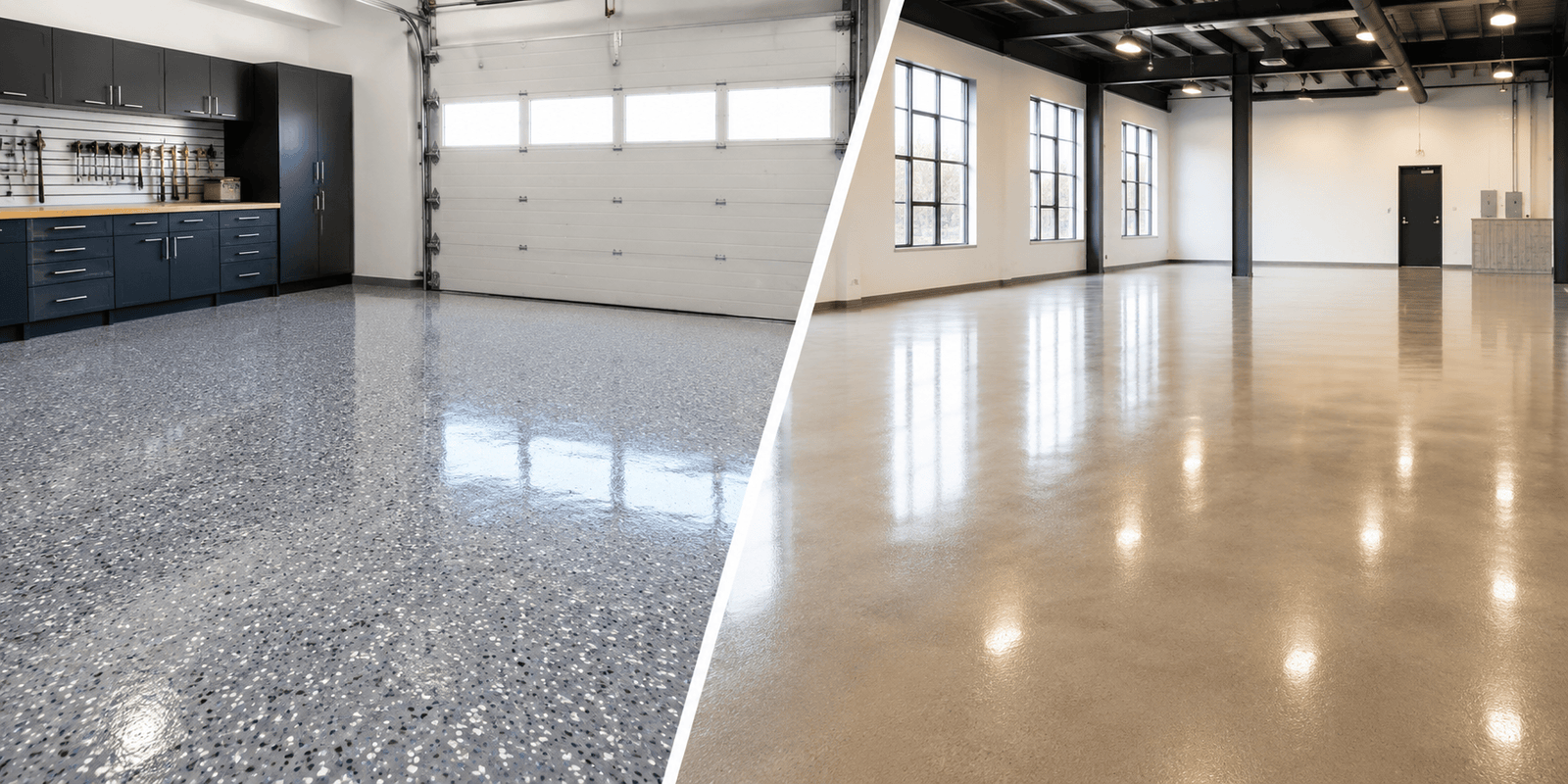
When it comes to protecting and beautifying your floors, choosing the right coating can make all the difference. Whether you’re upgrading a garage, warehouse, commercial kitchen, or a retail showroom, the epoxy vs polyurethane floor coating comparison is one of the most important decisions you’ll face. Both coatings offer exceptional durability and a polished finish but they are engineered differently and perform better in different environments.
In this comprehensive guide, we’ll break down everything you need to know about epoxy and polyurethane floor coatings, their composition, performance, cost, and ideal use cases so you can make a confident, informed decision.
Epoxy floor coatings are a two-component system made by combining epoxy resin with a polyamine hardener. When these two components react chemically, they form a rigid, thermosetting plastic that bonds powerfully to concrete surfaces.
Epoxy coatings are known for their:
High compressive strength making them ideal for heavy-duty industrial and commercial floors
Excellent adhesion they bond deeply to porous concrete
Chemical resistance suitable for facilities that deal with oils, acids, and solvents
Smooth, seamless finish easy to clean and maintain
Customizable appearance available in a wide range of colors, flakes, and metallic finishes
Epoxy is typically applied in multiple layers and requires proper surface preparation, including grinding or shot-blasting the concrete to ensure a strong bond.
Polyurethane (PU) floor coatings are polymer-based systems that offer superior flexibility and UV resistance compared to epoxy. They are available in both single-component (moisture-cured) and two-component formulations.
Polyurethane coatings are valued for their:
Flexibility and impact resistance they absorb shock and resist cracking under thermal movement
UV stability they don’t yellow or fade when exposed to sunlight
Scratch and abrasion resistance ideal for high foot-traffic areas
Chemical resistance particularly resistant to organic acids found in food and beverage environment
Thinner film builds often used as a topcoat over epoxy base coats
Polyurethane coatings are commonly applied as a finish coat over an epoxy primer or base, combining the strengths of both systems.
Understanding the core differences in the epoxy vs polyurethane floor coating comparison helps you match the right product to your specific needs.
Epoxy coatings are harder and more rigid. This makes them excellent for environments with heavy static loads, such as warehouses, manufacturing plants, and parking structures. However, their rigidity means they can crack when exposed to significant thermal cycling or point impact.
Polyurethane coatings, on the other hand, are more elastic. They flex slightly under pressure and temperature changes, making them less prone to cracking in environments with frequent temperature fluctuations like cold storage facilities or exterior applications.
One of the most significant differences is how each coating responds to sunlight. Epoxy coatings are not UV stable prolonged exposure to sunlight causes them to yellow, chalk, and degrade over time. This makes epoxy a poor choice for outdoor spaces or areas with large skylights.
Polyurethane coatings are highly UV resistant. They retain their color and gloss far longer when exposed to natural light. If aesthetics matter particularly in showrooms, lobbies, or outdoor patios polyurethane is the superior choice.
Both coatings offer strong chemical resistance, but with different specialties. Epoxy performs better against petroleum-based chemicals, making it preferred in automotive garages, fuel stations, and industrial plants. Polyurethane excels in environments exposed to organic acids (like lactic acid in dairies or acetic acid in food processing), making it the go-to coating for food and beverage facilities.
Polyurethane outperforms epoxy when it comes to surface abrasion. Its flexibility means it resists surface micro-scratches better, keeping the floor looking pristine longer in high-traffic commercial areas. Epoxy, being harder, can show scratches more readily over time.
Epoxy typically requires longer cure times often 24 to 72 hours before foot traffic and up to 7 days for full chemical cure. It is also sensitive to moisture during application; high humidity can cause adhesion failures.
Polyurethane systems, especially moisture-cured formulations, can tolerate more humidity during application and may offer faster return-to-service times. However, they are more sensitive to application temperature and require careful handling.
In general, epoxy coatings are less expensive per square foot for material costs. Polyurethane products tend to cost more upfront but may offer better long-term value in the right environments due to superior longevity and aesthetics.
A typical installed epoxy floor system ranges from $3 to $12 per square foot, depending on the number of layers and finish type. Polyurethane systems can range from $5 to $15 per square foot. Many professional floor coating contractors recommend a hybrid system epoxy base + polyurethane topcoat to capture the benefits of both.
Here’s a quick-reference breakdown to simplify your decision:
Factor | Epoxy | Polyurethane |
Best For | Industrial, automotive, warehouses | Commercial kitchens, showrooms, retail |
UV Resistance | Poor | Excellent |
Flexibility | Low (rigid) | High (flexible) |
Abrasion Resistance | Moderate | High |
Chemical Resistance | Petroleum-based | Organic acids |
Cost (materials) | Lower | Higher |
Cure Time | Longer | Shorter |
Ideal Climate | Stable temperature | Temperature fluctuating |
Many flooring professionals recommend a combined epoxy-polyurethane system for maximum performance. In this approach:
Epoxy is used as the base coat providing strong adhesion to concrete, a thick build, and excellent chemical resistance.
Polyurethane is applied as the topcoat delivering UV stability, scratch resistance, and a premium aesthetic finish.
This hybrid system is popular in commercial retail spaces, healthcare facilities, educational institutions, and food processing plants where both performance and appearance are critical.
Both coatings are relatively low maintenance, but there are some differences in how they age:
Epoxy floors are easy to clean with a mop and mild detergent. They are highly resistant to staining but can dull over time in high-traffic zones. A well-maintained epoxy floor can last 5 to 10 years in industrial settings.
Polyurethane floors maintain their gloss and color longer and are more resistant to everyday wear and tear. In commercial or light industrial settings, a polyurethane topcoat can last 10 to 15 years with proper care.
Regular cleaning, avoiding harsh scrubbing pads, and prompt spill cleanup will extend the life of either system significantly.
Modern epoxy and polyurethane coatings have evolved significantly in terms of environmental impact. Many formulations now offer:
Low-VOC and zero-VOC options for improved indoor air quality
Water-based variants that are easier to apply and clean up
Anti-slip additives for safety in wet or high-traffic environments
When selecting a coating, always ask your supplier about VOC content and whether the product meets local environmental and safety regulations especially for food-handling or healthcare environments.
Looking for a safe, low-VOC floor coating solution? Explore our range of eco-friendly epoxy and polyurethane systems designed for health-conscious environments.
The best coating system in the world will underperform if it’s applied incorrectly. When hiring a floor coating contractor, look for:
Experience with both epoxy and polyurethane systems
Proper surface preparation equipment (diamond grinder, shot blaster)
Knowledge of moisture testing (moisture vapor transmission is a leading cause of coating failure)
Warranty on both materials and labor
References from similar project types
A professional contractor will assess your facility’s traffic levels, chemical exposure, lighting conditions, and aesthetic goals before recommending the right system.
The epoxy vs polyurethane floor coating comparison ultimately comes down to your specific environment, budget, and performance expectations. Epoxy delivers unmatched strength and chemical resistance at a lower cost, making it the workhorse of industrial flooring. Polyurethane brings flexibility, UV stability, and superior aesthetics, making it the premium choice for commercial and customer-facing spaces.
For most applications, the ideal solution is a hybrid system that combines the structural power of epoxy with the surface excellence of polyurethane. Consulting with an experienced flooring professional is the best way to ensure you select the right system for your unique space and get the most out of your flooring investment.
Yes, polyurethane can be applied directly to concrete, but results vary. Without an epoxy base coat, adhesion may be weaker, and the floor may not achieve the same thickness or build. For best results, especially in high-traffic or industrial environments, a combined epoxy-polyurethane system is recommended.
Epoxy is generally the more popular and cost-effective choice for residential garages due to its excellent resistance to oil, gasoline, and tire marks. However, if your garage has large windows or is exposed to sunlight, adding a polyurethane topcoat will prevent yellowing and maintain the floor’s appearance over time.
Epoxy floor coatings typically last 5 to 10 years in industrial environments and longer in lighter-use settings. Polyurethane topcoats can extend the lifespan of the overall system significantly, with the combined hybrid system lasting 10 to 20 years with proper maintenance.
Polyurethane coatings are generally preferred for food processing environments because they offer superior resistance to organic acids (such as those found in dairy, meat, and beverage production) and are easier to keep hygienic. Many food-grade polyurethane systems also include anti-microbial additives.
Yes, but surface preparation is critical. The existing coating must be in good condition, properly cleaned, and mechanically abraded for the new coat to adhere properly. Applying over a failing or delaminating coating will result in premature failure. Always have a professional assess the existing floor before recoating.