
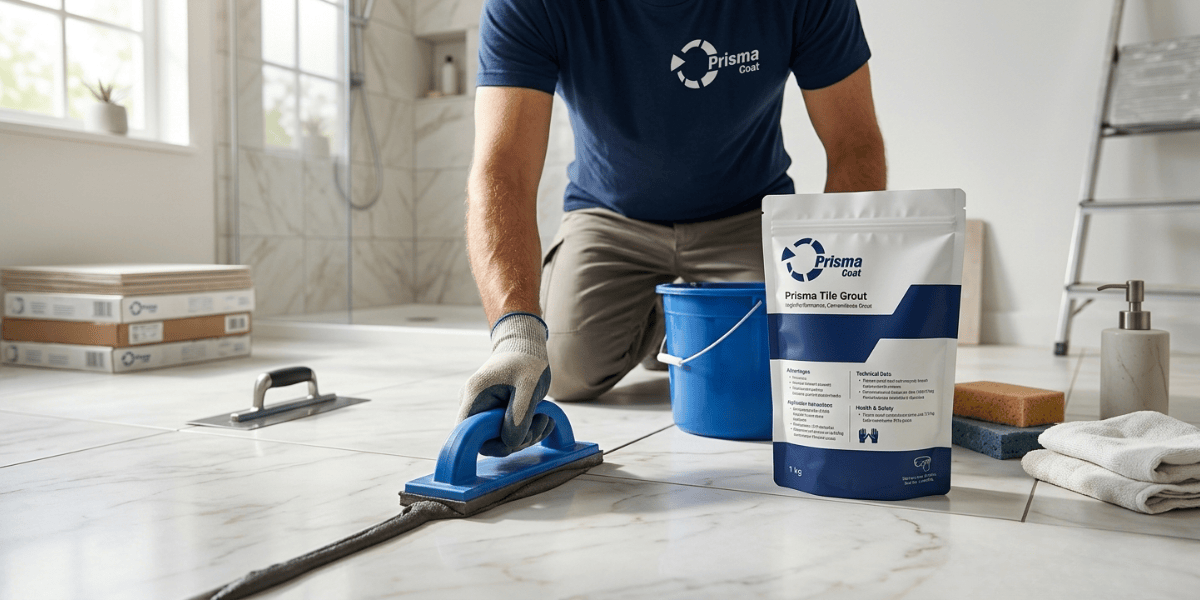
Grout does a quiet but important job. It holds your tiles together, keeps moisture out, and gives your floors and walls a finished look. Yet most homeowners only notice it when something goes wrong. A crack here. A dark stain there. A faint musty smell that just won’t leave.
The truth is, grout problems are incredibly common. Tile professionals report that grout is almost always the first part of a tiled surface to fail. The good news is that most of these problems are preventable. You just need to know what causes them and what to do before they spiral into costly repairs.
Here we will discuss the most common tile grout problems, why they happen, and exactly how to stop them in their tracks.
Tile Grouts are trendy. It is a porous, cement-based material. It sits in tight spaces between tiles, exposed to water, foot traffic, cleaning chemicals, and temperature changes every single day. That constant stress adds up.
Most grout failures trace back to a handful of root causes: poor mixing during installation, insufficient curing time, skipping the sealant, or simply neglecting regular maintenance. Knowing this gives you a real advantage because all of these things are within your control.
Below are some common tile grout problems that you can witness in your home.
Cracked grout is one of the most frequently reported tile problems. You might notice thin hairline fractures running along a single grout line, or wider gaps where the grout has started to crumble. In some cases, the cracking follows a pattern that mirrors the seams in your subfloor below.
The most common culprit is subfloor movement. Grout is strong under direct pressure, but it cannot handle bending or flexing. When the surface beneath the tile shifts even slightly, the grout is usually the first thing to crack.
Other causes include:
Hairline cracks often point to normal shrinkage or minor movement. Crumbling grout, on the other hand, usually signals a mixing error or a problem with how the grout cured.
Make sure your subfloor is solid and stable before any tile work begins. Loose or bouncy subfloors should be reinforced first. Use a flexible, polymer-modified grout in high-movement areas. Always allow grout to cure for the full recommended time. Rushing this step weakens the final result significantly. Install proper expansion joints at transitions between walls and floors, as specified by industry standards.
Stained grout is probably the most visible grout problem there is. White or light-colored grout turns gray or brown over time. Darker patches form near kitchen counters or bathroom floors. The tile itself looks clean, but the grout lines tell a different story.
Grout is naturally porous. Without a protective sealant, it absorbs everything it comes into contact with like water, cooking oils, spilled coffee, soap residue, and cleaning products. Over time, these substances build up deep inside the grout material, making the stains very difficult to remove with regular cleaning alone.
Hard water also plays a role. Mineral deposits from tap water leave a white or yellowish film on grout over time, especially in bathrooms and kitchens.
Sealing your grout is the single most effective thing you can do to prevent staining. A good penetrating sealer creates a barrier that keeps liquids and dirt from soaking in. High-traffic areas like shower floors and kitchen backsplashes should be resealed every 6 to 12 months. For lower-traffic areas, resealing every 12 to 18 months is generally sufficient.
Also, always wait 48 to 72 hours after grouting before applying a sealer. The grout needs to cure fully before the sealer can penetrate properly.
Wipe up spills quickly, especially colored liquids like wine, juice, or tomato sauce. The faster you act, the less chance the stain has to set.
Black or dark green spots along grout lines are a telltale sign of mold. You might also notice a musty smell in the bathroom even after cleaning. The spots tend to cluster around shower floors, wall junctions, and any area that stays wet for long periods.
Grout is a porous material, which makes it an ideal breeding ground for mold and mildew. Bathrooms create a constant cycle of heat, steam, and lingering moisture. When that moisture settles into grout lines without drying out, mold spores take hold quickly.
Poor ventilation makes this worse. A bathroom without a working exhaust fan or one that keeps its door closed after showers holds humidity much longer than it should. That extended moisture is precisely what mold needs to thrive.
Soap scum, body oils, and mineral deposits also contribute. These substances form a thin film on grout over time and essentially feed mold spores, accelerating growth.
Ventilation is key. Run your bathroom exhaust fan during and for at least 15 to 20 minutes after every shower. If you don’t have one, crack a window to let steam escape.
Dry the grout lines with a squeegee or towel after showering. It takes about 30 seconds and makes a meaningful difference in how quickly the surface dries.
Re-seal grout lines regularly, especially in wet areas. Sealed grout absorbs less moisture and gives mold far fewer places to take hold. For showers used daily, every 6 months is a smart sealing schedule.
If mold has already appeared, clean it with a mixture of baking soda and white vinegar, or a dedicated grout cleaner. For deep or widespread mold growth, a professional tile cleaning service is usually the safest and most thorough option.
Small gaps appear between the tile edge and the grout line. The grout seems to have pulled back slightly from where it was originally applied. You may also notice the grout feels soft or crumbles when pressed.
Grout shrinkage happens when the mix contains too much water. As the excess water evaporates during curing, the grout contracts and pulls away from the tile edges. Rapid drying caused by applying grout in direct sunlight or in a hot, dry room accelerates this process and makes the shrinkage worse.
Grout that shrinks creates small gaps where water, bacteria, and dirt collect. Over time, those gaps compromise the structural integrity of the tile installation.
Mix the grout to the exact consistency recommended on the packaging. More water does not make grout easier to work with, which makes it weaker. Protect freshly applied grout from fast drying by avoiding direct sunlight and keeping the area at a stable temperature. Mist the surface with water if needed during the curing process to slow evaporation.
The grout surface feels chalky or powdery to the touch. It may crumble when you press on it lightly, or leave a dusty residue on your fingers. This type of grout offers very little resistance and will likely continue to deteriorate.
Powdery grout is almost always caused by using too little water in the original mix. Without sufficient water, the cement particles in the grout never bond properly. The result is a weak, fragile surface that looks set but lacks structural strength.
There is no effective way to salvage powdery grout, it needs to be removed and replaced. The prevention is straightforward: always follow the manufacturer’s mixing ratio precisely. Use clean water, and mix thoroughly until you reach a smooth, lump-free consistency. Test a small amount before applying to a large area.
After grouting, a dull, cloudy film appears on the tile surface. The tiles seem to have lost their sheen. Regular wiping doesn’t seem to remove it fully.
Grout haze is dried grout residue that was not cleaned off the tile surface while it was still workable. It commonly happens when the installer waits too long before wiping down the tiles. Tiles with heavily textured surfaces are especially prone to this, because grout residue gets trapped in the texture and is harder to remove once it sets.
Wipe the tile surface with a damp sponge shortly after the grout starts to firm up but before it fully hardens. Work in small sections so you can clean each area before the window closes. For stubborn haze that has already dried, use a commercial grout haze remover or a diluted vinegar-and-water solution. Avoid using strong acids too early after grouting, as this can damage the grout itself.
The grout line sits noticeably lower than the surface of the tiles. The joints look recessed or hollow in places. Some areas may feel empty when pressed.
This happens when grout is not packed fully into the joint during installation. Air pockets form beneath the grout surface. Over time, these voids cause the grout to sink further or break apart. Improper grout selection using a grout type not suited to the joint width also leads to this problem.
Press grout firmly into the joint during application using a rubber float held at a 45-degree angle. Work the grout in at least two diagonal directions to eliminate air pockets. Choose the right grout type for the joint size: unsanded grout for joints under 1/8 inch, sanded grout for wider joints.
Consistent maintenance is far easier than dealing with advanced damage. Here is a simple schedule to keep your grout in good shape year-round.
Not all grout is the same, and using the wrong type is a common cause of preventable problems.
Some grout problems go beyond a simple DIY fix. If you notice widespread cracking across large sections of tile, it could point to a structural issue with the subfloor or substrate — not just the grout. Regrouting without addressing the root cause will only lead to the same problem repeating.
Persistent mold that returns quickly after cleaning, or dark staining that does not respond to commercial cleaners, often requires professional equipment and products to treat properly.
A professional tile and grout restoration service can also regrout, deep clean, and reseal your surfaces in a single visit, saving you time and protecting your tile investment for the long term.
Grout problems are frustrating, but they are rarely permanent. Most of the issues, like cracking, staining, mold, and shrinkage, can be prevented with the right product choices, a proper installation process, and a consistent maintenance routine.
Seal your grout regularly. Clean it with the right products. Address small cracks and spots before they grow. That combination of small, consistent habits will keep your tile surfaces looking sharp and structurally sound for many years to come.
With proper sealing and routine cleaning, grout can last 10 to 15 years or more. Heavy traffic, moisture, and skipped maintenance will shorten that timeline considerably.
It is not recommended. New grout applied over old grout rarely bonds well and tends to crack or fall out quickly. The old grout should be removed first for a lasting result.
A paste of baking soda and water scrubbed with a stiff brush works well for most stains. Avoid bleach-heavy or highly acidic cleaners, as these break down the grout and strip the sealant over time.
Pour a few drops of water onto the grout line. If the water beads up, the seal is still intact. If it soaks in and darkens the grout, it is time to reseal.
Repeated cracking in one area usually means the subfloor or substrate beneath the tile is moving or flexing. Regrouting without fixing the underlying movement will not solve the problem permanently.
Some minor darkening is normal, especially in wet areas. Significant color changes usually point to staining, mold growth, or a sealant that has worn off and needs to be reapplied.
Yes, mold in grout, particularly black mold, can release spores into the air that irritate the respiratory system. Anyone with allergies or asthma is especially sensitive, so mold on grout should be treated promptly.