
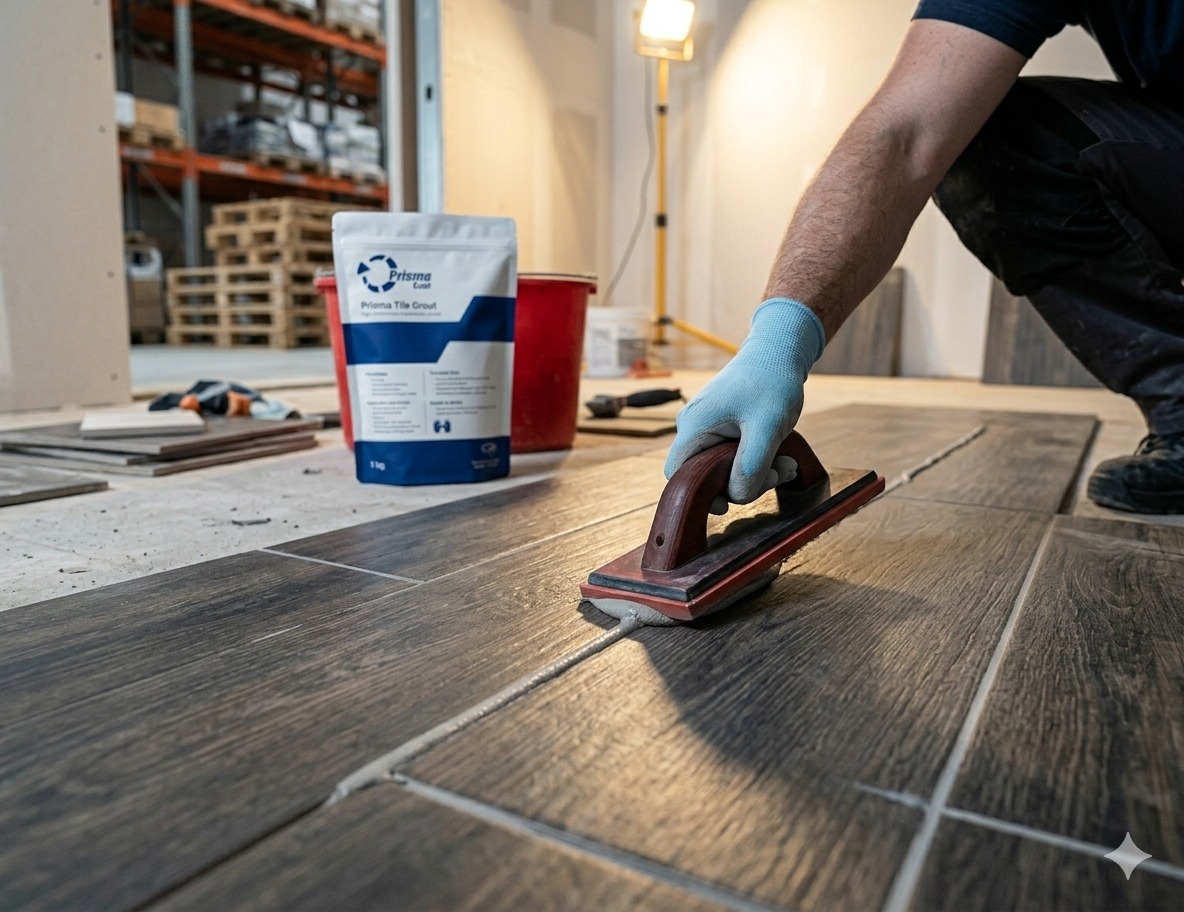
Just imagine, your new floor tiles look flawless under the lights, and the overall finish feels complete. Within a few weeks, grout lines begin to collect footprints, spills, and daily marks that dull the entire look. Most floor projects fail at this exact point, not because of the tiles, but because of the grout choice.
Modern flooring in 2026 leans toward large-format tiles, earthy palettes, and low-maintenance surfaces that require durable, performance-driven grout. Floors deal with constant traffic, moisture, and dirt, so a basic grout option no longer meets real-life needs.
The right tile grout for floor applications helps here to improve durability, reduces staining, and maintains a cleaner appearance over time. So, let us tell you, what tile grout actually is and how to choose it for your tile flooring.
Tile grout for floor is the material that fills the gaps between floor tiles and holds the entire surface together. It may look like a small detail, but it plays a big role in keeping tiles stable, aligned, and protected from dirt, moisture, and damage.
In simple terms, tile grout for floor works as a seal and support layer between tiles. It prevents water from seeping underneath, reduces tile movement, and stops debris from getting trapped in the joints. Without proper grout, tiles can loosen, crack, or shift over time, especially in high-traffic areas like kitchens, bathrooms, and hallways.
Tile grout is made from a carefully balanced mix of cement, fine mineral fillers, polymers, and performance-enhancing additives. The blend of these products create a perfect grout for tiles.
The cement acts as the primary binding material that hardens and holds the tiles firmly in place, while the fine fillers create a smooth and dense texture that properly fills the joints between floor tiles.
Modern tile grout for floor applications, especially those offered by performance-focused brands like Prisma Coatings, also includes polymer modifiers and special additives. It helps in the following ways:
These ingredients make the grout more durable and suitable for areas exposed to foot traffic, moisture, and daily wear.
Some higher-performance options of tile grout are also available, where additional compounds are added to increase stain resistance and long-term stability.
Overall, tile grout is not just a filler; it is an engineered material designed to strengthen tile installations and protect the subfloor to maintain a clean, durable, and long-lasting floor surface.
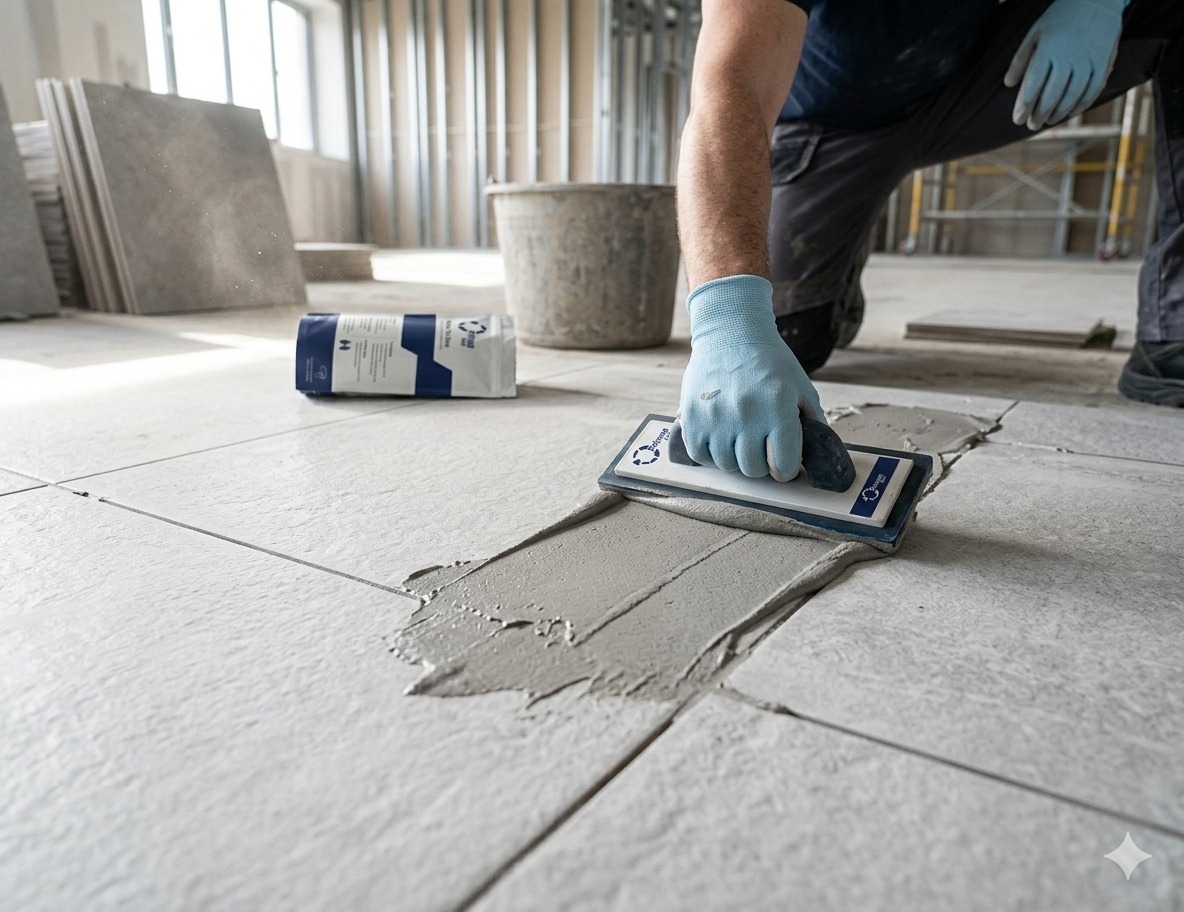
Choosing the right tile grout for floor projects in 2026 requires more than picking a color that matches the tiles. Modern flooring trends focus on durability, low maintenance, and long-term performance. Grout now plays a main role in managing strength, cleanliness, and a stability of the tiled floor over time. So here are some ways for you to choose a tile grout this year.
Every floor space has different demands. A kitchen floor faces spills and regular cleaning. A hallway handles constant foot traffic. A bathroom deals with moisture on a daily basis. The selected tile grout for the floor should match the usage of the space to avoid early wear and discoloration.
Different grout types offer different levels of strength and maintenance. The choice should depend on tile size, traffic level, and exposure to moisture.
Tile dimensions directly affect grout performance. Large-format tiles usually require stronger grout that can support wider joints. Narrow joints work better with smoother grout that fills gaps neatly without shrinkage. Proper compatibility between tile size and grout type improves floor stability.
Floor grout must handle daily pressure and regular cleaning. High-performance tile grout for floor applications is designed to resist stains and reduce surface damage over time. A durable grout choice lowers maintenance efforts and helps the floor maintain its original appearance for longer periods.
Grout color affects both design and upkeep. Light shades show dirt more easily and require frequent cleaning. Medium or darker tones help conceal everyday marks and maintain a cleaner visual look. A balanced color choice enhances the floor while reducing visible wear.
Budget-friendly grout may seem appealing at the start, but it often requires more maintenance and repairs. Premium grout solutions provide better strength, improved bonding, and longer service life. A well-chosen tile grout for floor surfaces supports durability, appearance, and overall flooring performance in the long run.
Tile grout directly affects the strength, appearance, and lifespan of the entire floor. A well-informed choice ensures that the tiles remain secure and the surface stays intact under daily use. Ignoring key factors often leads to early cracking, discoloration, and frequent repairs that increase long-term maintenance efforts.
Floor surfaces experience constant pressure due to foot movement and regular cleaning. The right tile grout for floor applications supports the tiles and prevents shifting or joint damage over time. A suitable grout type also improves resistance against moisture penetration, which protects the subfloor and reduces the risk of hidden damage.
A practical selection also helps maintain visual consistency. Grout that matches the floor’s usage and color requirements keeps the surface looking clean and uniform instead of worn or patchy. Proper evaluation of grout type, joint width, and durability ensures better performance in high-traffic or moisture-prone areas.
Careful consideration of these factors leads to a more stable installation and lower maintenance in the long run. A durable grout choice enhances floor longevity, preserves aesthetics, and reduces the need for frequent touch-ups or replacements.
The right tile grout for floor acts as a foundation for long-lasting and reliable flooring performance. It strengthens tile joints, supports structural stability, and helps maintain a neat and uniform appearance even with regular use. A smart grout decision protects the floor from early damage and reduces the chances of frequent repairs or visible deterioration.
As flooring standards evolve in 2026, high-quality and performance-focused materials become essential for durable results. Prisma Coatings provides advanced grout solutions designed to meet modern flooring demands and deliver consistent strength and finish. A well-selected grout ensures the floor stays durable, visually balanced, and easier to maintain over the long term
The best tile grout for floor depends on traffic level and moisture exposure. High-performance or polymer-modified grout works well for most modern floors due to better strength and durability.
Yes, cement-based grout usually requires sealing to reduce moisture absorption and staining. Sealing helps extend the life of the grout and keeps the floor looking cleaner.
Medium or darker grout shades are often more practical for floors. They hide dirt and daily marks better than very light colors and require less frequent cleaning.
Yes, epoxy grout is a strong option for floor tiles, especially in high-traffic or moisture-prone areas. It offers better stain resistance and long-term durability compared to standard grout.
Tile grout for floor can last many years if installed properly and maintained well. The lifespan depends on the grout type, floor usage, and maintenance practices.
Yes, using unsuitable grout can lead to cracking, joint gaps, and tile movement over time. Proper grout selection supports tile stability and protects the overall floor structure.