
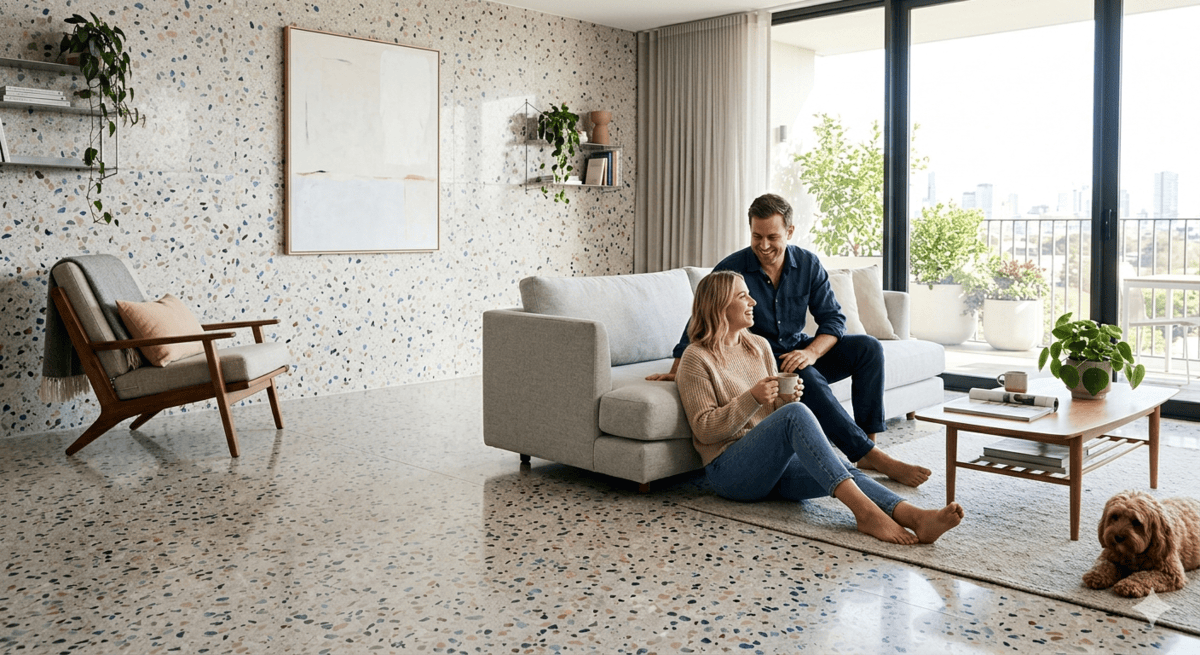
Terrazzo has come a long way. What started as a Venetian flooring technique in the 1500s has grown into one of the most sought-after surface finishes in modern interior design. Today, it is not just a flooring material. It shows up on walls, countertops, bathrooms, lobbies, and feature spaces everywhere designers want to make a bold yet refined statement.
The global terrazzo flooring market was valued at USD 31.26 billion in 2024 and is projected to reach USD 55.08 billion by 2034. That growth tells a clear story: people are investing more in surfaces that look great and last long.
Modern terrazzo coatings bring all the visual richness of traditional terrazzo with far less weight, thinner application, and far more design flexibility.
Terrazzo coatings are decorative surface systems that replicate the look of traditional terrazzo without requiring a thick installation base. They are applied as a coating or plaster over existing surfaces, bonding directly to concrete, masonry, plaster, or other substrates.
Traditional terrazzo required installation depths of 2 to 3 inches. Modern terrazzo coatings, by contrast, go on at just 6 to 10 millimetres and sometimes even thinner. That slim profile makes them practical for renovation projects, high-rise interiors, and any space where floor-height restrictions apply.
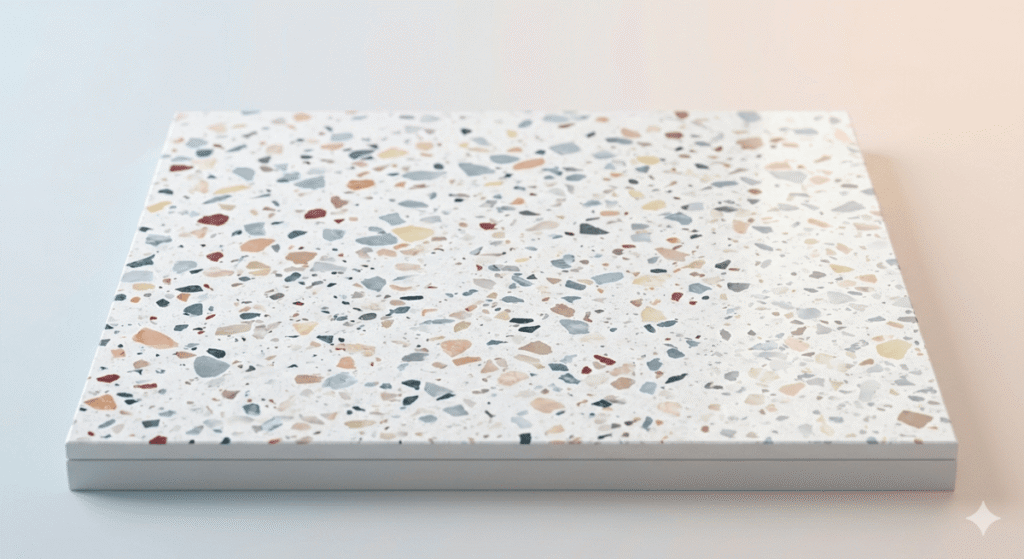
The result is a seamless, polished surface with the same visual character as classic terrazzo: coloured aggregates of marble, quartz, glass, or recycled materials set into a smooth, durable binder.
Traditional terrazzo is beautiful, but it comes with real constraints. The installation is thick and heavy. It takes a long time to cure. Labour costs are higher because the process involves grinding and polishing a thick base layer. Modern terrazzo coatings solve most of these challenges.
Traditional cement-based terrazzo requires a setting bed that adds considerable depth and load to a structure. Modern coatings apply at a fraction of that depth. This makes them ideal for renovation work where the floor or wall structure cannot support heavy additions.
Epoxy-based terrazzo coatings cure in roughly 24 hours. Cement terrazzo systems need considerably longer before grinding and polishing can begin. On active construction sites, that time difference translates directly into cost savings.
Modern coatings can be pigmented and customised across a vast range of colours, patterns, and aggregate combinations. This was not possible with traditional cement systems, which offered a limited colour palette. Today, a terrazzo coating can be matched to a specific brand colour, a custom interior scheme, or a specific architectural vision.
Terrazzo coatings bond to existing walls and floors. There is no need for demolition. They work over concrete, masonry, cement board, and many other substrates. That makes them a cost-effective upgrade for existing spaces.
Not all terrazzo coatings are the same. The right choice depends on where the surface will be used, how much traffic it will receive, and what aesthetic result you want.
Epoxy terrazzo uses an epoxy resin as the binder. It is the most popular choice for indoor applications. The resin creates a non-porous, seamless surface that is highly resistant to stains, moisture, bacteria, and heavy foot traffic.
Epoxy terrazzo coatings deliver vivid, consistent colour because the epoxy matrix can be fully pigmented. The result is a floor or wall with rich, saturated tones that stay consistent year after year.
They work exceptionally well in commercial spaces such as hospitals, schools, hotels, retail stores, and airports. Residential applications include feature walls, bathroom floors, kitchen countertops, and living area floors.
One important note: epoxy terrazzo is not suitable for outdoor surfaces exposed to direct sunlight. UV exposure causes colour fading and surface degradation over time. For outdoor applications, cement-based options are a better fit.
Cement terrazzo coatings use a cementitious binder and are the more traditional choice. They are suitable for both indoor and outdoor applications, making them the go-to option for exterior walls, patios, pool decks, and outdoor pathways.
They tend to be more porous than epoxy alternatives and require regular sealing to stay stain-resistant. The colour range is slightly more limited, and the curing time is longer. That said, cement terrazzo is extremely durable. Historic examples of cement terrazzo installations are still intact after more than two centuries of use, which speaks to the exceptional lifespan of the material.
Microcement is a newer decorative coating that blends the look of terrazzo with the ultra-thin application of cement. It is trowel-applied in layers just 2 to 3 millimetres thick. Microcement terrazzo finishes are popular for feature walls and bathroom surfaces because they achieve a seamless, joint-free appearance with minimal added thickness.
Resin-based decorative plasters combine the texture of plaster with the durability of modern resins. Systems like these are waterproof, scratch-resistant, and can be applied over existing surfaces without demolition. They are an excellent option for homeowners who want a terrazzo-inspired finish on walls and ceilings without committing to a full flooring installation.
Terrazzo surfaces are known to outlast the buildings they are installed in. With proper care, a terrazzo coating can remain in excellent condition for 50 years or more. High compressive strength means the surface handles heavy foot traffic, moving furniture, and daily wear without showing significant damage.
A sealed terrazzo coating requires very little upkeep. Regular sweeping and occasional damp mopping is all it needs for daily cleanliness. Epoxy variants have a non-porous surface, which means stains sit on top rather than soaking in. There is no need for frequent resealing or specialised cleaning products.
Studies suggest that the low maintenance requirements of terrazzo finishes can save building owners up to 30% in surface repair and replacement costs over time compared to traditional wall and floor finishes.
Terrazzo coatings are one of the most customisable surface finishes available. You can choose aggregate types, sizes, and colours. You can select a background binder colour. You can create geometric patterns, gradients, or abstract designs. The finish can be polished to a high gloss or left with a more natural, matte texture.
Search data confirms the growing appetite for personalised terrazzo design. The query “terrazzo wall tiles” has shown a consistent upward trend in consumer searches, with notable peaks throughout 2024 and 2025, reflecting strong and growing demand.
Many terrazzo coatings incorporate recycled aggregates including post-consumer glass, reclaimed marble chips, and recycled quartz. This reduces material waste and supports green building certification standards such as LEED and BREEAM.
Epoxy terrazzo products made from 100% solids are completely VOC-free, which means no harmful off-gassing during or after installation. That makes them a healthy choice for schools, hospitals, and homes with children or people with respiratory sensitivities.
Unlike tiles, terrazzo coatings create a completely seamless surface with no grout lines. There are no joints for dirt, bacteria, or moisture to accumulate in. This is a significant hygiene benefit in commercial kitchens, medical facilities, and bathrooms.
The seamless appearance also makes spaces feel larger and more open, which is why interior designers increasingly specify terrazzo coatings in smaller rooms and narrow corridors.
Cement-based terrazzo coatings are naturally non-combustible. They do not support flame spread, which makes them a safe choice for buildings where fire resistance is a priority. This is one reason why terrazzo surfaces are widely specified in public buildings, airports, and educational institutions worldwide.
Bathrooms are one of the best places to use terrazzo coatings. The seamless surface eliminates grout lines where mould typically builds up. Waterproof resin or epoxy coatings handle constant moisture exposure without degrading. The result is a bathroom that looks luxurious and stays hygienic with minimal effort.
Use large-format terrazzo finishes on floor-to-ceiling bathroom walls for a spa-like effect. Pair with matte fixtures for a contemporary, understated look, or with brass hardware for a warmer, more decorative feel.
Terrazzo coatings hold up well in kitchens. The non-porous surface resists cooking oil, food stains, and cleaning chemicals. A seamless kitchen floor with a matching backsplash creates a cohesive, high-end aesthetic without the complexity of tiling multiple surfaces.
Bold terrazzo designs such as large aggregate chips in warm terracotta or deep blue tones are one of the defining interior design trends of 2025 and 2026. Kitchens benefit especially from these vibrant choices.
Terrazzo coatings work well on high-traffic residential floors. A polished epoxy terrazzo floor in a hallway or open-plan living area creates a statement surface that is also practical. The smooth finish is easy to keep clean, and the design options mean it can complement both minimalist and eclectic interior styles.
Terrazzo has moved well beyond floors. Feature walls in living rooms, reception areas, and commercial lobbies increasingly use terrazzo coatings as a design centrepiece. A single terrazzo accent wall adds visual interest without overwhelming a space. It works especially well behind furniture groupings, along staircases, or as a backdrop in retail and hospitality environments.
The commercial sector drives a significant share of terrazzo demand. Hotels, corporate offices, shopping centres, schools, hospitals, and airports all use terrazzo coatings for their combination of durability, hygiene, and visual appeal. The epoxy segment is expected to lead the global terrazzo market through 2034, driven largely by commercial interior projects.
The design direction in 2025 and 2026 leans toward larger, more visible aggregate chips set against contrasting background colours. Deep blues, emerald greens, warm terracottas, and rich blacks are popular choices. These bold combinations create floors and walls with genuine artistic character.
Glossy terrazzo has been the default for decades. Matte-finished terrazzo coatings are now growing fast in popularity. A matte surface creates a more organic, understated look. It reduces reflections and feels more natural, which suits contemporary residential interiors very well.
One of the most striking applications of modern terrazzo coatings is extending the same finish from the floor up onto the walls without interruption. This creates a completely immersive surface environment. It is especially effective in bathrooms, showers, and open-plan commercial lobbies.
Architects and designers increasingly specify terrazzo systems that incorporate recycled glass, crushed tiles, or industrial by-products as aggregates. This satisfies both aesthetic goals and environmental certification requirements. Recycled content in terrazzo is now a mainstream specification, not a niche request.
Mixing metallic elements like brass, copper, or gold flecks into terrazzo aggregate is a growing design trend. These accents catch light and add subtle warmth to an otherwise stone-dominated surface. The result sits between traditional terrazzo and modern luxury finishes.
Ceramic tiles create grout lines that collect dirt and harbour bacteria over time. Terrazzo coatings are seamless. Tiles can crack individually and require matching replacements, which become harder to source over time. Terrazzo coatings can be spot-repaired in most cases. Terrazzo also offers far more design customisation than standard tile ranges.
Polished concrete gives a raw, industrial look. Terrazzo coatings offer far more colour and pattern variation. Both are durable, but terrazzo provides a warmer, more decorative result. For spaces that need personality alongside practicality, terrazzo is the stronger choice.
Standard wall paint and plaster are inexpensive but limited in durability, texture, and design impact. A terrazzo wall coating transforms a plain surface into an architectural feature. The lifespan difference is significant a well-applied terrazzo coating outlasts conventional paint finishes by decades.
Vinyl and laminate are affordable short-term solutions, but they do not match terrazzo in lifespan, hygiene, or aesthetic value. Terrazzo coatings add long-term value to a property. For commercial environments, especially, the lifecycle cost of terrazzo is consistently lower than repeatedly replacing cheaper flooring materials.
At Prisma Coatings, we specialise in premium decorative plaster and surface coating systems built for both beauty and performance. Our products are designed for the conditions of modern construction ready for interior and exterior applications, resistant to cracking, and formulated for durability that stands the test of time.
Our decorative coatings are backed by a 5-year warranty, giving you the confidence that your investment will hold up through daily use and changing conditions. Every product is engineered for smooth application, consistent finish quality, and long-term performance that keeps walls and floors looking sharp for years to come.
If you are planning a residential renovation, a commercial fit-out, or a new construction project, our team is ready to help you find the right coating system for your space.
Modern Terrazzo coating is a thin, decorative surface system that delivers the look of terrazzo at a fraction of the installation depth. Traditional terrazzo is 2 to 3 inches thick. Modern coatings go on at 6 to 10 millimetres, making them far more practical for renovations and wall applications.
Yes. One of the key advantages of modern terrazzo coatings is that they bond directly to existing substrates like concrete, masonry, and plaster.
A properly installed and maintained terrazzo coating can last 50 years or more. Epoxy-based coatings are especially durable and are known to outlast the buildings they are installed in when properly cared for.
Yes. Waterproof resin and epoxy terrazzo coatings are ideal for bathrooms, showers, and wet rooms.
The finish level determines the slip resistance. A high-gloss polished terrazzo can be slippery when wet. For floor applications in wet areas, a matte or satin finish or an anti-slip aggregate additive is recommended to maintain a safe walking surface.
Regular sweeping and damp mopping with a pH-neutral cleaner is all that is needed. Avoid acidic or abrasive cleaners, which can damage the surface. Wipe up spills promptly to prevent staining, especially on cement-based systems.
Cement-based terrazzo coatings are well suited to outdoor applications including exterior walls, patios, and pathways. Epoxy terrazzo coatings are not recommended for outdoor use because UV exposure causes the epoxy resin to degrade and discolour over time.
Installation time depends on the system and the size of the area. Epoxy terrazzo coatings typically cure within 24 hours and allow light foot traffic within 48 hours. Cement-based systems take longer to cure fully before polishing can begin.